
 Submit Quote
Miller-Stephenson Rubber Mold Release Agents offer superior performance, reliability, and ease of use. Designed to enhance productivity, rubber flow out, and keep molds cleaner, our ReleaSys Rubber mold release agents are the ideal solution. Large and small manufacturers will benefit from our cost-effective water based and solvent based solutions semi-permanent or sacrificial release coatings. Miller-Stephenson release coatings are particularly effective on difficult to release and high tack rubber and elastomer compounds. Utilization of fluoropolymer and silicone release chemistries enables our team to provide the optimal solution to meet you needs
Benefits Include:
• Fluoropolymer, Silicone, and 100% Silicone Free Formulas • Ideal for all Rubbers and Elastomers • Minimal or Zero Transfer • Cleaner Molds, No Build-up • Water-based and Solvent-based Available • Excellent High Temperature Stability
Rubber Mold Release Agent FAQ
What is a Rubber Mold Release Agent?
A Rubber Mold Release Agents is a tailored coating designed to ensure the vulcanizing rubber does adhere to the molding surface. The release agent forms a crosslinked nonstick, thin barrier on the mold surface, ensuring smooth rubber flow out and release. The release agent bonds to the mold surfaces, forming a durable, inert release film typically lasting for numerous cycles before reapplication is needed. The rubber mold release agent is designed to not impact the curing / vulcanization process and not contaminate the rubber part. This part is critical as cross-contamination or mechical properties is major concern for manufacturers and customers.
What manufacturing process use a Rubber Mold Release Agent?
Rubber molding is process that typically utilizes heat, pressure and a chemical reaction to generate elastomer or rubber product. Typically9 molding process are as follows:
- Compression Molding - Pressure and high temperatures are used to cure / vulcanize the rubber
- Injection Molding - Injection of liquid, uncured rubber in a cavity. Vulcanization occurs quickly. This process is used from O-rings and other high volume processes
- Transfer Molding - Combination of Compression and Injection. Generally used to make more complex parts
Rubber mold release agents play a critical role in providing the non-stick, barrier required to ensure the uncured conforms to the mold design, releases easily, and does not contaminate the mold surface
Why use a Rubber Mold Release Agent?
Manufacturers of rubbers and elastomers rely on rubber mold release agents to prevent sticking of the rubber to mold surface, ensure consistent removal, maintain part quality, and eliminate mold fouling. The mold release agent provides the critical barrier and lubrication need to allow the rubber to fill the mold completely and release with leaving residues behind. Further, the vulcanization process and corrode mold surfaces, a light coating of a rubber mold release agent protect the mold surface, extending the life of the mold. Products like the ReleaSys 8500 and 8200 are great examples of mold release agents designed for rubber molding
What types of rubbers benefit from a rubber mold release?
In general any mold rubber mold operation can benefits from a mold release agent. Rubbers and Elastomers are highly sticky and typically require aggressive vulcanization processes that would erode mold surfaces, cause sticking and eventual production interuptions. The rubbers list below all benefits from a protective film of mold release:
- EPDM / Ethylene Propylene Diene monomer
- FKM and Fluorosilicones
- HNBR, SBR and Neoprene
- EVA
- ECO and Crumb Rubber
- Peroxide or Sulfur cured rubbers
How is the best way to apply a Rubber Mold Release Agent
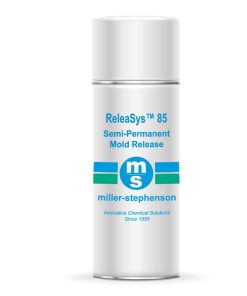
Given that most rubber molding operations are rubbing at elevated temperatures, the best method to ensure smooth, even and reliable applicaiton is via spray application. Any method which can provide a fine atomized spray is ideal. Miller-Stephenson tends to recommend HVLP or aerosol cans. Products such as our ReleaSys 85 aerosol spray is a ready to use, offering excellent coverage and release performance. For larger molds or improved performance our ReleaSys 8200 is a great all-round selection for any rubber compounds

PTFE Free Release Agents - No Intentionally Added PFAS
Rubber Mold Release Agents | ReleaSys™ 85
$24.94
ReleaSys 85 is a highly versatile water-based, rubber mold release agent designed to exhibit superior durability, extended release performance, and zero transfer for all Rubber and Elastomeric compounds. Our best rubber mold release agent in an aerosol. PFAS and fluoropolymer free
- High Release / Zero Transfer
- Optimized for all Elastomer and Rubber mold release Applications
- Ideal for complex or tacky compounds
- Improves quality and consistency of molded parts
- Minimizes mold build-up and fouling

PTFE Free Release Agents - No Intentionally Added PFAS
Rubber Release Agent | ReleaSys™ 7500
Price range: $92.00 through $142.50
Versatile Rubber Release Agent. Excellent all-round release of rubbers, elastomers, crumb rubbers, and urethanes. Waterbased Rubber release agent, very compatible and will not contaminate or transfer to molded parts. 100% paintable. PFAS and fluoropolymer free
- Exceptional Release ease
- 100% Paintable / Zero Transfer
- Ideally for Crumb Rubber, Elastomers, & Polyurethane
- Water-based, zero VOC formulation

Epoxy Mold Release Agents
PTFE Water-based Release Agents | ReleaSys™ 8200
Price range: $75.60 through $183.32
PTFE Water-based Release Agent. Advanced PTFE Dry Film release agents designed to provide reliable, consistent release across a broad range of moldable substrates. Excels at compression and transfer molding. ReleaSys™ 8200 will not interfere with post-production finishing operation.
- Ideal for Rubbers, Elastomers, & Plastics
- Ideal for Silicone Rubber & LSR
- 100% Silicone & Wax free
- Clean, Non-oily, Non-migrating

Rubber Mold Release Agents
Elastomer Release Agent | ReleaSys™ 8500
Price range: $95.00 through $185.00
Highly versatile, rubber and elastomer release agent designed to exhibit superior durability and release. Advanced chemistry provides extended reapplication intervals. Ideally suited for high-throughput rubbers, fluorocarbon and elastomer molders. Semi-permanent mold release of natural and synthetic rubbers, FKM, Viton, etc.
- Optimized for Difficult Rubber & Elastomer molding
- Ideal for Complex Molds
- High Release; Zero transfer
- Minimizes mold build-up and fouling
- PFAS free

Epoxy Mold Release Agents
Silicone Free Mold Release | ReleaSys™ DF
Price range: $114.37 through $284.43
ReleaSys™ DF is a Silicone free mold release agent. Utilizing advanced PTFE dryfilm chemistry, ReleaSys DF provides superior mold release of Epoxy, Composite, Rubber & Plastics. Zero transfer or contamination. 100% Paintable
- DryFilm Release System
- Silicone Free; Non-Migrating
- No interference will post-molding operations
- Rapid Drying and low odor
PTFE Free Release Agents - No Intentionally Added PFAS
Anti-Tack Coating | ReleaSys™ MT-W23
Price range: $72.00 through $92.00
ReleaSys™ MT-W23 Anti-Tack Coating is highly lubricious, water-based calcium stearate dispersion designed specifically to provide superior anti-tack and anti-stick to the surface of rubbers during processing and storage, tire manufacturing, wire jackets, and extrusion/preforms.
- Superior Anti-Stick and Anti-Tack Coating
- Uniform Dispersion of Calcium Stearate & Slip-Additives
- 100% Water-based, Zero VOC
- Rapid drying; Leaves behind a water-repellent Dryfilm
Rubber Mold Release Agents
Tire Release Agent | ReleaSys™ TM1
Price range: $175.00 through $295.00
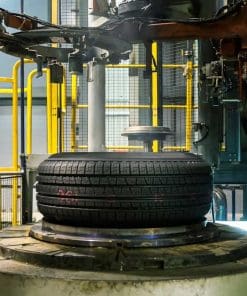
ReleaSys™ TM1 is a high-performance, high cross-linking Tire Release Agent designed to be the most advanced Tire / Bladder release coating available. Part of a new generation of reactive polysiloxane chemistry, ReleaSys™ TM1 promotes highly efficient bladder release, providing better air evacuation, smoother slip, durable release performance.
- Exceptional release ease and friction reduction
- Multi-release from a single application
- No fillers; Optimized coating weight
- Increased bladder life
- Minimized buildup and fouling